In 2026, sophisticated buyers no longer start their research on Google. They open ChatGPT, Grok, Gemini, Perplexity, or Claude and ask direct questions:
“Best luxury real estate agent in [city] for executive relocation?”“Which car dealership near me offers the strongest post-sale support for high-end vehicles?”“Should I buy from this premium home builder or their cheaper competitor?”
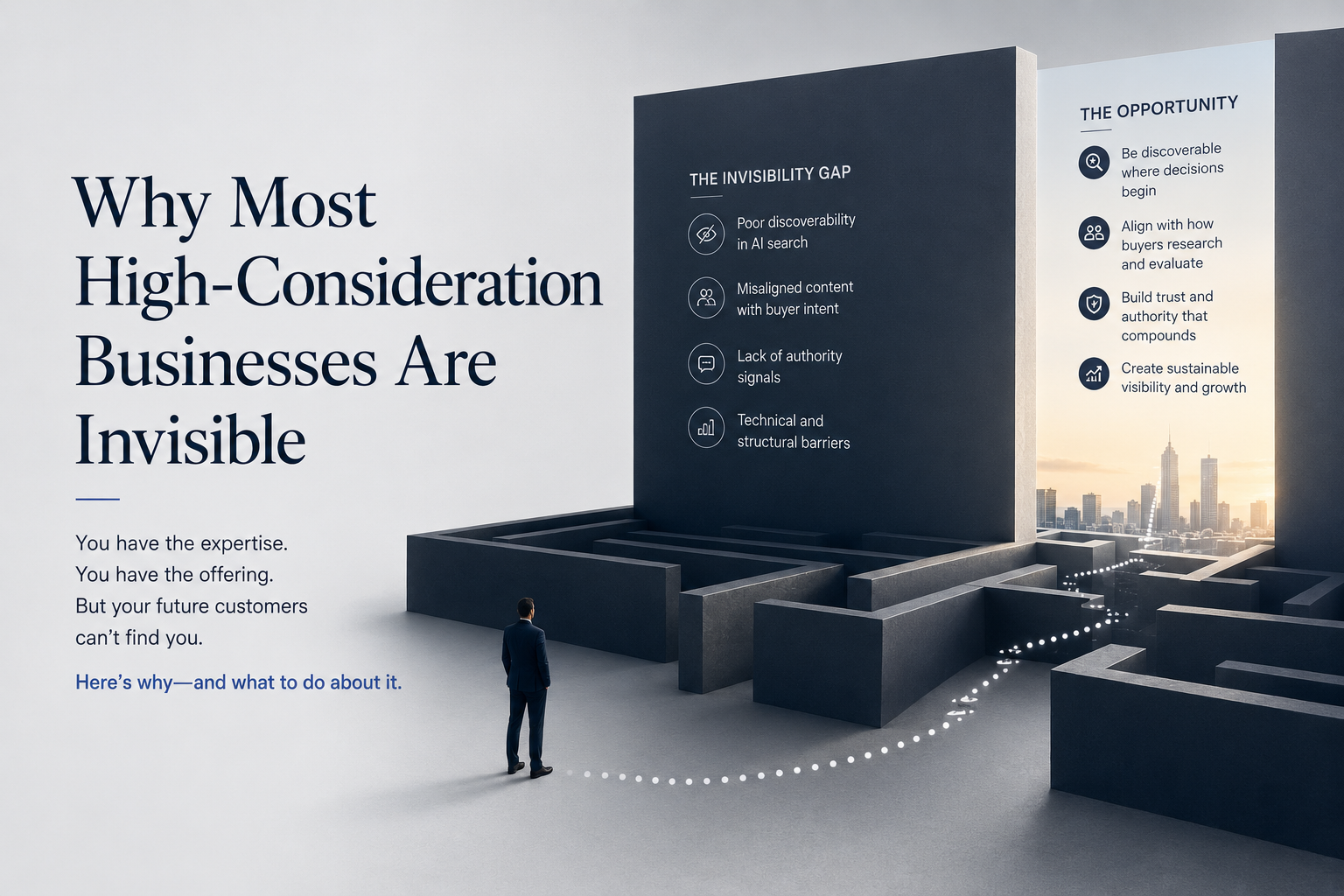
High-consideration businesses — luxury realtors, premium automotive dealers, custom home builders, specialized consultants, medical practices, and B2B service providers — are being evaluated by AI systems that demand clarity most websites still don’t provide.
The New Buying Reality
These buyers expect direct, confident answers to three types of questions:
- Commercial intent: “Which provider is right for my situation?”
- Objections: “Is it worth the premium price?” “What happens if something goes wrong?”
- Comparisons: “How does this company compare to [Competitor X]?”
When a website cannot deliver clean, consistent, machine-readable answers to these questions, AI systems default to better-structured competitors or stay neutral. Visual appeal and traditional SEO are no longer enough. AI recommendation readiness has become table stakes for any business where deal sizes are large, sales cycles are long, and trust is non-negotiable.
Why Most High-Consideration Businesses Stay Invisible to AI
We recently ran a Clarity Core Assessment on a well-established high-ticket industrial business. Despite being a national leader in its category, it scored 58/100. The AI could see the offerings and some proof points, but it could not confidently answer:
- Who exactly this business is
- Whether a specific buyer is a fit
- How it handles common objections
- Why it wins against named alternatives
This is not an isolated case. It is the default condition for most high-consideration businesses today. Their sites lose deals before a human conversation ever begins.
The root causes fall into five recurring patterns:
Entity Graph Chaos — The business identity is fragmented across inconsistent names, URLs, and schema. AI cannot lock in a single, stable entity.
Missing Buyer-Answer Architecture — The site speaks in broad benefits but lacks explicit content that helps buyers (and AI) determine fit for specific situations, industries, or use cases.
Objection Black Holes — Strong claims exist, but real buyer fears are rarely addressed directly and reusably. Objections are implied through testimonials rather than answered head-on.
Comparison Vacuum — Few businesses publish clear, honest differentiation against named competitors or alternative options. AI has nothing to work with when asked “why choose you?”
Structural Readability Collapse — Heavy design, JavaScript, and poor template hygiene make it difficult for AI systems to extract clean answers, even when the underlying expertise is strong.
These failures compound. Even businesses with strong offerings and genuine differentiators remain understood but not recommended.
How Clarity Addresses This
This is exactly why we built the Clarity Core Assessment and Entity Authority Build the way we did. We don’t do generic website redesigns or vanity SEO. We engineer recommendation confidence through a focused 90-day framework, that might look something like:
Days 0–30: Stabilize IdentityDeploy one canonical business entity across the entire site and extend structured data to all core commercial pages. This step alone often produces the largest lift in entity graph consistency.
Days 31–60: Build Buyer-Answer & Objection ArchitectureCreate dedicated content that maps offerings to specific buyer situations and directly addresses the top objections. We make constraints explicit (“We are not the right choice if…”) because clarity increases both trust and lead quality.
Days 61–90: Add Comparison Assets & Structural DepthDevelop honest comparison content against the top alternatives buyers actually consider, then validate everything with raw HTML and rendered extraction testing.
Businesses that complete this process typically move from medium-confidence scores into strong shortlist-capable status. AI systems begin including them in relevant recommendation prompts with greater frequency and confidence.
The framework applies across luxury real estate, premium automotive, custom building, and specialized B2B services because the underlying failure patterns are consistent.
Next Step
If your business operates in high-consideration categories and you suspect your website is underperforming with AI buyers, we can show you exactly where the gaps are.
Clarity Digital Advisory runs focused AI Signal Diagnostics that examine entity clarity, query coverage, and recommendation readiness, then deliver a prioritized remediation plan.
Most high-consideration businesses cannot afford to remain invisible to AI in 2026. The question is no longer whether AI influences buying decisions, but whether your business will be the one recommended when it does.